Denmark Launches AltID: What One of Europe's First Live EUDI Wallets Means for Banks
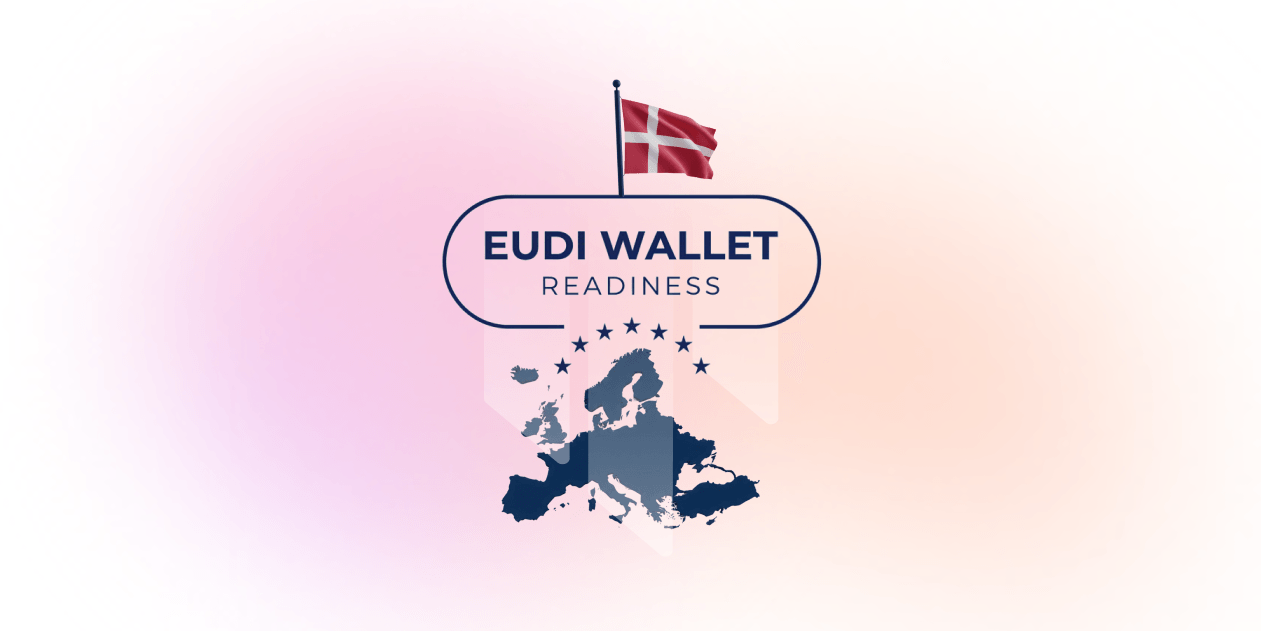
On June 3, 2026, Denmark launched AltID - one of the first official digital identity wallets in the EU.
Available on iOS and Android for anyone over 13 with a MitID account and a Danish CPR number, it stores a digital ID card and an age certificate locally on the device.
No centralised database. No usage tracking. Zero-knowledge proofs for age verification - users confirm they meet an age threshold without revealing their date of birth or national ID number.
It is a quiet launch. No fanfare.
Just an app in the store, backed by a government agency.
And that is exactly why it matters.
From EUDI Policy to Live Infrastructure: Why AltID Matters
For the past 3 years, EUDI Wallet has been a regulatory project. Frameworks, working groups, reference implementations, pilot programmes.
The December 24, 2026 deadline - by which all 27 EU member states must make at least one certified wallet available to citizens - has felt distant enough to treat as someone else's problem.
The December 24, 2026 deadline - by which all 27 EU member states must make at least one certified wallet available to citizens - has felt distant enough to treat as someone else's problem.
AltID changes that framing.
Denmark has positioned AltID as its national EUDI Wallet implementation, confirmed by the Danish Agency for Digital Government - the designated competent authority for eIDAS 2.0 in Denmark.

The agency is rolling out AltID in phases, on a 3-5 year roadmap of expanding credentials and functionality. Formal certification is still ahead, but the infrastructure is live and the intent is official.
With the deadline now 6 months away, the picture across Europe is uneven.
The European Commission has signalled that only a limited number of member states are likely to meet it. The Netherlands has publicly acknowledged it will not deliver full functionality in time. Others are still in pilot mode.
What Denmark has done - put working infrastructure in citizens' hands ahead of certification - puts it ahead of most.
What the AltID Launch Means for Banks and Financial Institutions
The wallet acceptance mandate follows the rollout mandate.
By late 2027, banks, telecoms, and large online platforms operating in the EU must accept EUDI Wallets as a primary authentication method. That window is shorter than it looks when you factor in the procurement cycles, compliance reviews, and technical integrations that financial institutions require.
The AltID launch surfaces 3 practical questions that banks can no longer defer.
I. Onboarding Design and the MitID Coexistence Reality
When a customer presents a wallet credential instead of a document scan, the onboarding flow changes - the data format, assurance level, and consent model are all different.
Banks that have not yet mapped this journey need to start. Denmark illustrates why this is more complex than it looks.
MitID, the country's existing national eID, has 5.5 million registered users and is used by 87% of Danish adults at least once a week. But MitID is an authentication tool, not a document wallet - it confirms who you are and grants access to services, but does not store credentials on the device.
AltID adds that layer: local storage of identity credentials with selective disclosure via zero-knowledge proofs.

AltID does not replace MitID.
It extends the Danish digital identity ecosystem - and the Danish Agency for Digital Government has confirmed a 3-5 year roadmap for adding further credentials and functionality to AltID over time.
What launched on June 3 is the foundation, not the finished product.
For banks, the practical implication is that a customer onboarding today might present a MitID credential, an AltID wallet credential, a document scan, or nothing digital at all.
Each path requires different handling.
Routing between them intelligently - based on what the customer has, what the use case requires, and what compliance demands - is the central design challenge of the EUDI transition period.
II. Cross-Border Interoperability and Wallet Acceptance
AltID is designed to work across EU borders - a Danish wallet credential should, in principle, be accepted at a German bank or a Dutch fintech.
In practice, cross-border trust infrastructure and mutual recognition frameworks are still being finalised.
Banks operating across multiple markets need to monitor this closely and avoid building integrations that assume a single-country scope.
III. KYC, AML, and the Expanding Scope of Wallet Attributes
The compliance implications of EUDI Wallets go well beyond identity verification at onboarding.
The first wave of wallets, including AltID, focuses on identity - confirming who the customer is with a high-assurance credential. But identity is only the first step.

Over the coming months, wallets will begin carrying additional attributes.
For more sophisticated product lines - savings accounts, lending, investment products - banks will need to process attestations covering tax residency, income verification, and credit-relevant data directly from wallet credentials.
The compliance and data handling implications need to be mapped before those attributes arrive.
The longer-term shift is more structural still.
Banks are mandated to transform their transaction authorisation frameworks by incorporating Strong Customer Authentication (SCA) attestations directly from the wallet - moving SCA from bank-controlled flows to wallet-native attestations.
This has the potential to fundamentally reshape how payment transactions are authorised under PSD2 and its successors.
How Authologic Helps Banks Prepare Without Rebuilding Their Stack
The biggest barrier to EUDI readiness in the financial sector is not a lack of willingness. It is a lack of awareness.
Financial institutions are operating under an unprecedented volume of regulatory change. AMLR, CCD2, PSD3, DORA - the pipeline is relentless.
In that environment, eIDAS 2.0 and the EUDI Wallet mandate have quietly slipped off the radar for many compliance and technology teams.
Banks are realising very late that they have a hard obligation to implement - not just an option to explore.
This is where subject-matter expertise matters as much as technology.
Knowing which mandates apply, in which markets, on which timelines - and how they interact with existing compliance frameworks - is not something most banks can map internally at speed.
The core technical challenge compounds this.
It is not wallet acceptance in isolation - it is orchestration: handling wallet credentials alongside national eIDs, bank-based identity verification, biometrics, and document checks within a single onboarding flow, across multiple markets, without rebuilding compliance processes and identity flows every time a new wallet scheme or regulatory requirement goes live.
Authologic connects all of these paths through a single API.
Danish banks looking to accept AltID credentials today - and stay ready for every subsequent wallet rollout across Europe - can do so without managing country-by-country integrations.
The orchestration layer handles routing, fallback logic, and compliance requirements regardless of which identity method the customer presents.
Wallet-ready, without being wallet-dependent.
The Cost of Waiting

The regulated sectors most exposed to the 2027 mandate - banking, financial services, telecoms - are also the sectors with the longest implementation lead times.
Organisations that start now are not just preparing for a compliance deadline.
They are building early experience with credential-based identity verification, which is structurally different from document-based verification and has compounding value: better conversion rates, lower fraud exposure, and readiness to extend to new markets as national wallets roll out.
Denmark is one country. But it is an early, concrete signal of what the next 12 to 18 months look like across the continent.
The question is not whether EUDI Wallets are coming.
It is whether your organisation is ready to accept them when they arrive.
Not sure where your organisation stands?
Download 20 questions that help banks identify gaps before the 2027 acceptance mandate kicks in.
Share article
Press Contacts
Dominika Cepek
dominika.cepek@authologic.comAuthologic
contact@authologic.com